Why Your Office Lobby Still Looks Dirty After Cleaning
DMC Cleaning Service
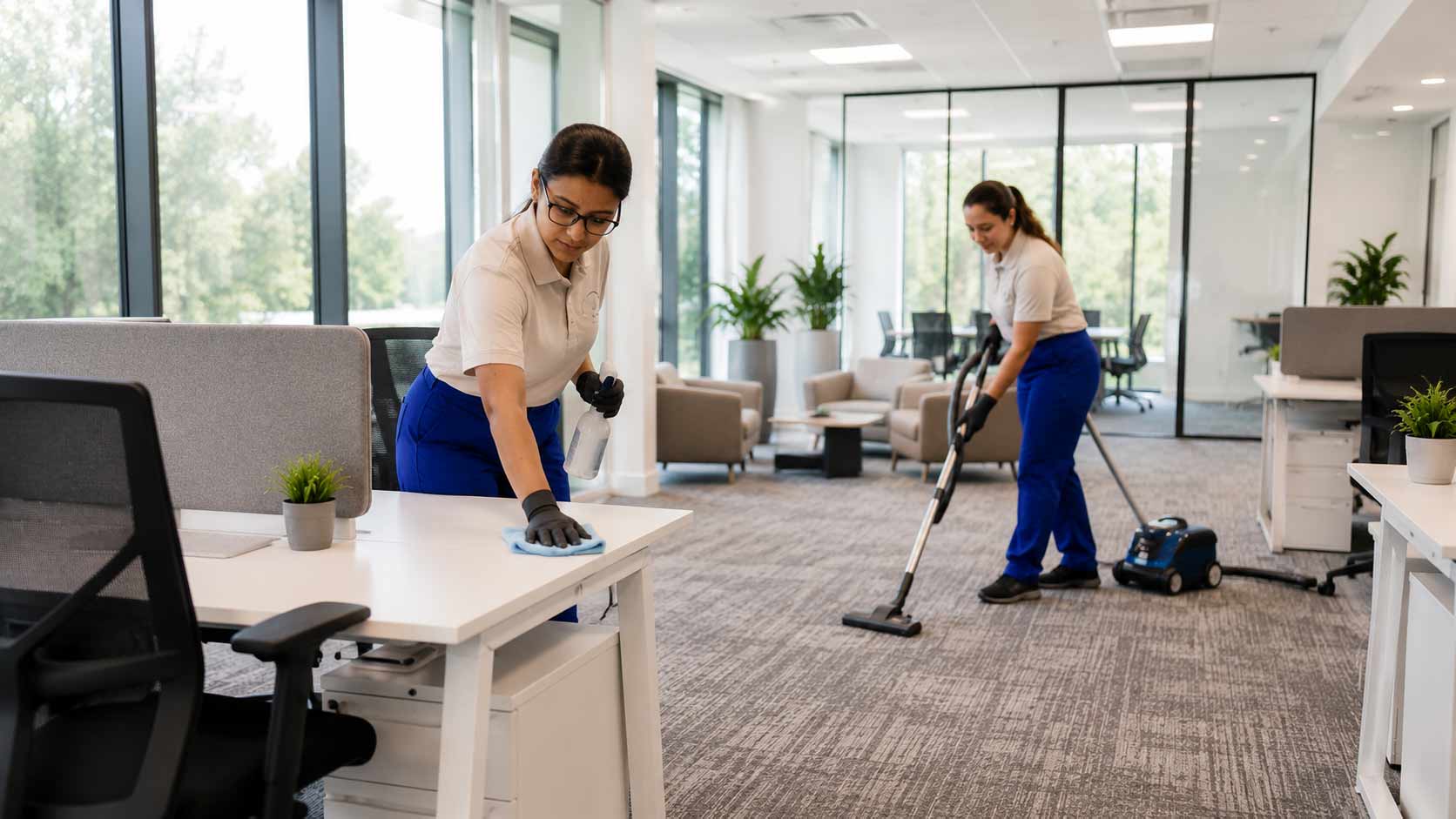
You watch the cleaning crew finish their nightly routine in your New Brunswick office lobby, yet by 9 AM the next morning, smudges reappear on the glass doors, the floors look streaked, and visitors still track in visible dirt. Despite paying for regular cleaning services, your entryway continues to make a poor first impression on clients and prospective employees.
The problem isn't how often you clean—it's that specific cleaning mistakes keep sabotaging your results. When commercial lobbies in Central New Jersey look perpetually dingy despite daily attention, the issue typically traces back to five overlooked errors that standard cleaning routines miss completely.

Why Your Office Lobby Still Looks Dirty After Cleaning
Why Daily Cleaning Doesn't Fix the Real Problem
Most businesses assume that increasing cleaning frequency will solve persistent grime, but this approach addresses symptoms rather than causes. The dirt you see reappearing within hours after cleaning reveals that the cleaning process itself is flawed, not that you need more of it.
When lobbies in East Brunswick and Woodbridge look dirty despite nightly service, the cleaning crew is likely spreading contaminants rather than removing them, using incorrect products that leave residue, or skipping the surfaces that actually matter most for visual cleanliness. Frequency cannot compensate for technique.
The Dirty Mop Syndrome
Cleaning floors with contaminated mop water simply redistributes dirt across your lobby instead of removing it. This creates the hazy, streaked appearance that makes floors look worse an hour after cleaning than they did before.
Wrong Product, Wrong Surface
Using general-purpose cleaners on specialized surfaces leaves sticky residues that attract dust and create that perpetually grimy look. Glass cleaners on floors, floor cleaners on upholstery, and all-purpose sprays on stainless steel all produce disappointing results.
The Invisible High-Touch Zones
Door handles, reception counters, and elevator buttons collect oils and germs that transfer to everything visitors touch afterward. These overlooked surfaces are often the actual source of the "dirty" feeling in your lobby, even when floors are spotless.
The Complete Lobby Cleaning Audit Checklist
- Check if mop water is changed at least every 500 square feet or when visibly dirty
- Verify cleaning products match surface types (stone needs different solutions than vinyl)
- Inspect door glass from outside in natural light to spot streaks and film buildup
- Test if matting extends at least 12 feet inside entrances to capture incoming dirt
- Examine grout lines and floor edges where dirt accumulates when cleaning is rushed
- Confirm high-touch surfaces like door handles are disinfected, not just wiped
- Look for product residue by running a clean white cloth across supposedly clean surfaces
- Check that vacuum filters are clean and equipment has proper suction power
- Verify corners and baseboards are actually being cleaned, not just the center traffic areas
- Assess lighting quality, as poor illumination hides dirt that visitors see clearly
Note: The most common reason office lobbies look dirty after cleaning is that cleaning crews are working under time pressure that forces them to skip the prep work and detail steps that actually produce visible results.
Get a Lobby That Stays Clean All Day
Our family-owned team brings over 20 years of hands-on experience to commercial properties throughout Central New Jersey. We'll identify exactly why your lobby isn't staying clean and fix the underlying issues, not just treat the symptoms.
Common Questions About Persistent Lobby Grime

Hi, we're DMC Cleaning Service
Hi, we are DMC Cleaning Service. A clean home is not just our profession, it is our passion. Founded by Diva Costa in 2020 and backed by over 20 years of hands on experience, our family owned team has helped families and businesses across Central New Jersey enjoy a clean, healthy space so they can focus on what matters most. We are licensed and insured, and our background checked, trained cleaning professionals follow a written room by room checklist so every visit meets the same standard of care.